
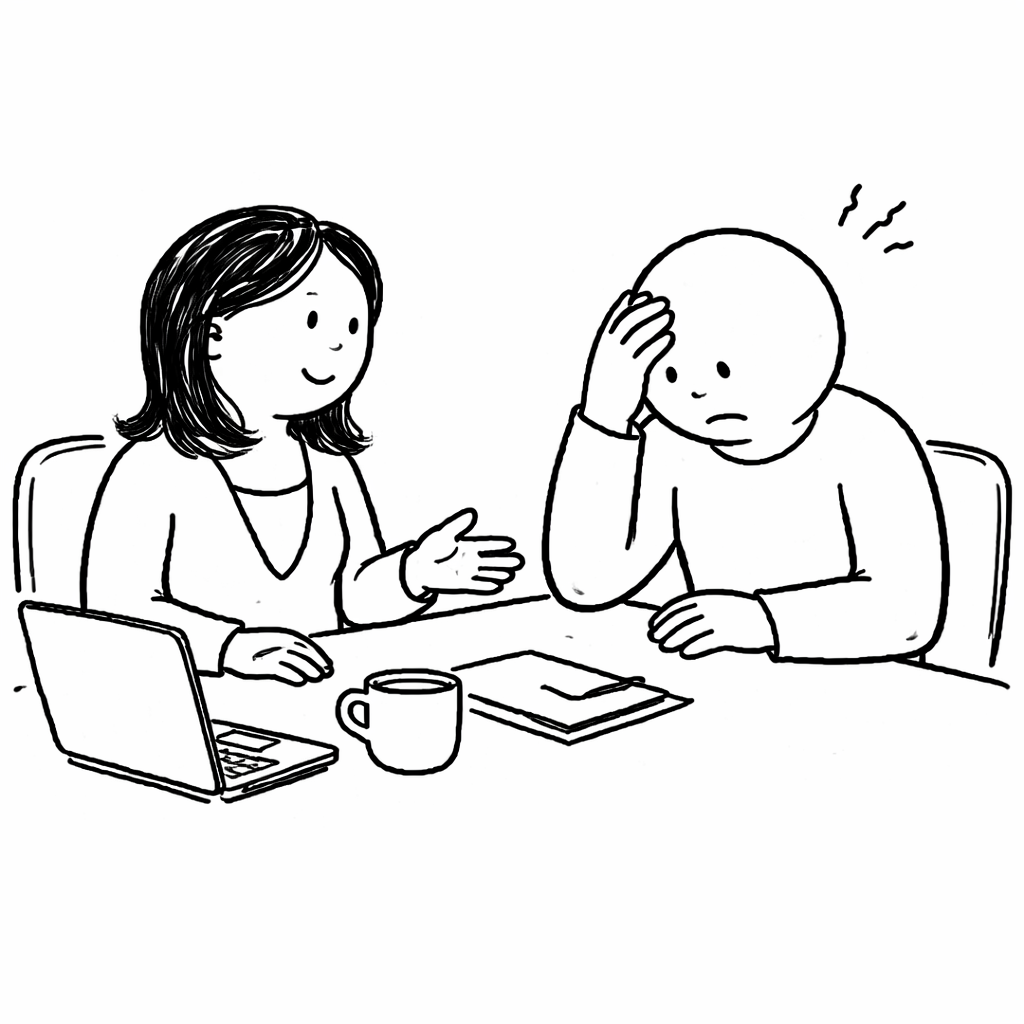
If you ask people what they want from a partner, you’ll hear the same words again and again: “I just want someone who gets me,” or “I need to feel valued.” We talk about chemistry, compatibility, even love – but beneath those big, fuzzy concepts lurk two very concrete experiences: feeling *understood* and feeling *appreciated*. A growing body of psychological research argues that these feelings are not soft extras. They are among the strongest predictors of whether relationships feel good and last. Strikingly, it is often *more important* that you *believe* your partner understands and appreciates you than that they are perfectly accurate or flawless in how they behave. In a recent review in *Current Opinion in Psychology*, researchers Amie Gordon and Emily Diamond pull together the latest findings on these themes. They ask three questions: Where do feelings of being understood and appreciated actually come from? How do they shape the quality and resilience of romantic relationships? And what happens in those fleeting, magical moments when both partners feel fully seen and valued at the same time? Their answer, in essence: these perceptions act as emotional shock absorbers during hard times, fuel positive cycles of kindness and responsiveness, and may be the “social glue” that makes partners feel in sync. Perception beats perfection First, a somewhat sobering point: in close relationships, perception routinely trumps reality. Studies of couples consistently find that people’s *perceptions* of a partner’s responsiveness – how caring, understanding and supportive they think the partner is – do more to predict relationship satisfaction than the partner’s objectively observed behaviour. Likewise, feeling understood by your partner is typically a stronger predictor of how happy you are together than how accurately that partner could describe your inner world in a lab test. This doesn’t mean behaviour is irrelevant. What people do in relationships obviously matters. Rather, it means that the way those behaviours are *registered and interpreted* is what ultimately shapes how a relationship feels from the inside. You can be with someone who, on paper, is doing and noticing the right things, but if you don’t experience them as “getting” you or valuing you, the relationship will feel unsatisfying. Conversely, a partner who occasionally misreads you may still be experienced as deeply understanding and appreciative if their general stance conveys those attitudes. That is why Gordon and Diamond focus on *felt* understanding and *felt* appreciation – the subjective sense that “my partner knows and values me” – as the key psychological ingredients of connection. Where do these feelings come from? When your partner helps you feel known and valued Some of the most obvious influences on feeling understood and appreciated are your partner’s everyday actions. Responsiveness and maintenance Unsurprisingly, people feel more appreciated by partners who engage in what psychologists call “relationship maintenance behaviours”: checking in about your day, making sacrifices, trying to resolve conflicts rather than avoid them, encouraging you to talk about your feelings rather than shutting you down. Expressions of gratitude are especially potent. When someone notices what you do for them, names it, and thanks you, you’re more likely to feel that your efforts matter – that you are valued, not taken for granted. Attention and listening Partners who pay attention make a difference. Active listeners – the ones who ask follow-up questions, remember what you said last week, and pick up on your emotions – foster a sense of being understood and appreciated. In laboratory studies, people feel more understood when they receive thoughtful, detailed responses than when the other person offers bland acknowledgements. A partner who says, “So, if I’m hearing you right, you felt sidelined in that meeting and worried it would happen again,” is sending a far stronger signal of understanding than one who simply murmurs “That’s tough.” Recent work on “high-quality listening” has begun to unpack this. Behaviours like maintaining eye contact, nodding, asking good questions and validating (“That makes sense given what you’ve been through”) all tell the speaker, “I am with you, I hear you.” Unsurprisingly, those behaviours are linked to higher perceived understanding and appreciation. Similarity and expressiveness We tend to feel more understood by people who resemble us in values, personality and emotional style. If you and your partner react in similar ways to the world – both amused by the same jokes, or both outraged by the same injustice – it’s easier to assume they “get” you at a deep level. Partners who are more emotionally expressive can also help. When someone reacts visibly – smiling when you share good news, wincing when you describe a slight – their responsiveness is easier to read. That clarity makes it easier to feel known. How you see yourself shapes what you feel from your partner The story doesn’t end with what partners do. Gordon and Diamond emphasise that felt understanding and appreciation are also shaped by your own personality, beliefs and mood. Reciprocity: being the partner you want Psychologists have long observed a kind of reciprocity in relationships: if you are warm, attentive and appreciative toward your partner, they are more likely to respond in kind. This means that one way to feel more understood and valued is to *be* more understanding and appreciative yourself. Over time, that can create a culture in the relationship where both people see each other through kinder, more responsive eyes. Being non-defensive helps too. In studies of couple conversations, people tend to feel more understood and appreciated when they themselves are able to listen openly and share honestly, rather than reacting with counter-attacks or stonewalling. There is a virtuous circle here: feeling understood makes people less defensive, and being less defensive makes it easier to feel understood. Projection: seeing your own traits in your partner We humans are inveterate projectors. If you see yourself as a caring, understanding partner, you are more likely to assume your partner is caring and understanding too. Research suggests that people project their own levels of responsiveness onto their partners – a generous person tends to believe “my partner would do the same for me”, often regardless of hard evidence. The same goes for appreciation. If you see yourself as someone who values your partner, you may be more inclined to interpret their ambiguous gestures as appreciative as well.